
Installing a solar power system is one of the best ways to lower your electricity bills and make your home more energy-efficient. Before choosing the right system, it’s also important to understand the different types of solar systems available for residential properties so you can select the option that best suits your energy needs.
The answer depends on several factors, including your monthly electricity consumption, the available roof space, the efficiency of the solar panels, your location, and the amount of sunlight your home receives throughout the year.
This guide will help you understand how to calculate the right number of solar panels for your home and the factors that influence your solar system size.
Fast Answer
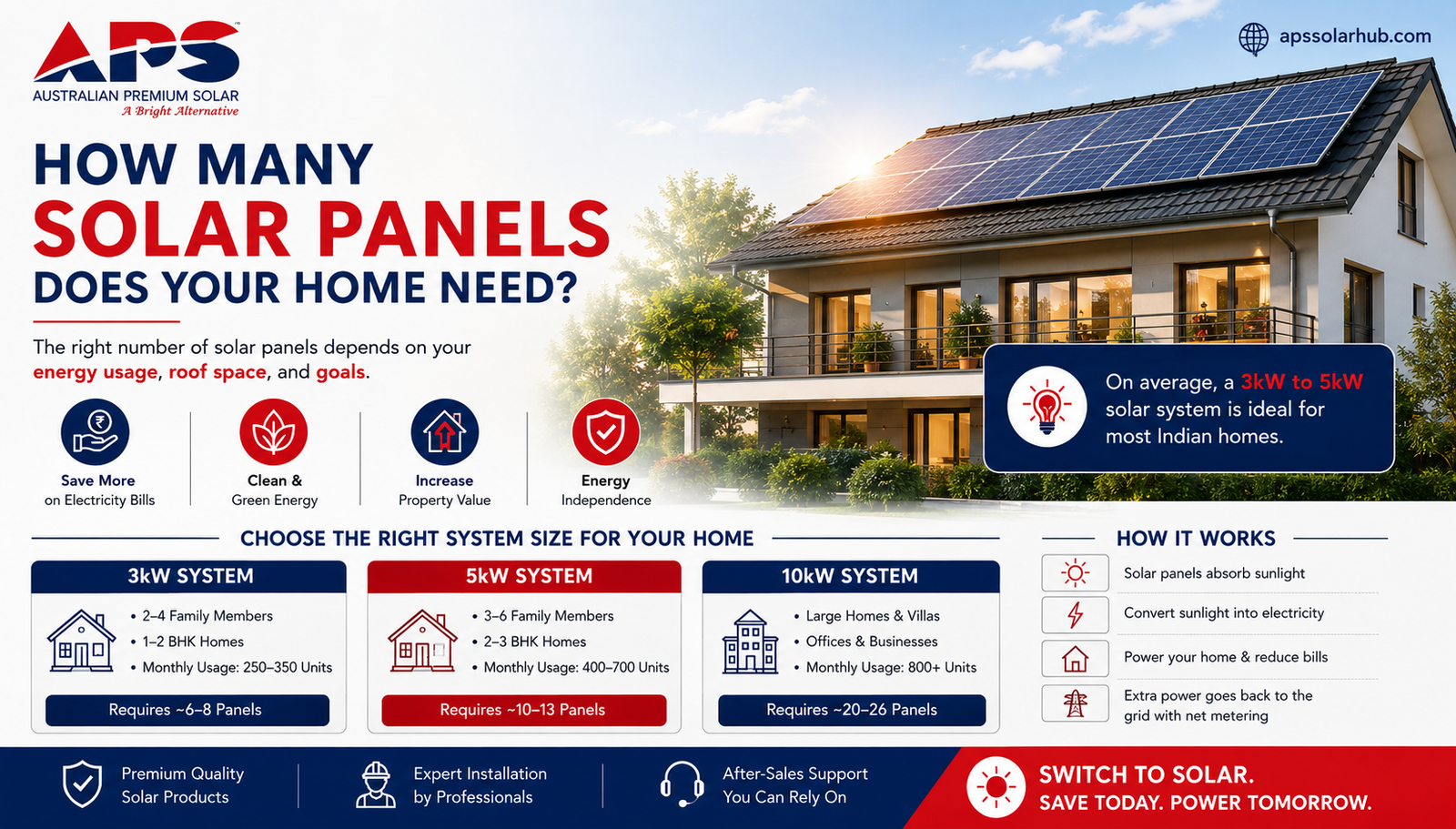
The average home in India typically requires 8 to 20 solar panels, depending on monthly electricity usage and the wattage of the panels.
- 1–2 BHK Home: 2–3 kW solar system (5–7 panels)
- 3 BHK Home: 3–5 kW solar system (7–12 panels)
- Large Home: 5–10 kW solar system (12–22 panels)
If your household consumes around 450–600 units of electricity each month, a 5 kW solar system with 10–12 high-efficiency solar panels is generally enough to meet your energy needs.
Why Does the Number of Solar Panels Vary?
Every home has different energy requirements, which means the number of solar panels needed also varies. Factors such as your electricity usage, roof size, panel efficiency, and local weather conditions all play an important role in determining the ideal solar system size.
Your Monthly Electricity Consumption
Your monthly electricity consumption is the most important factor when deciding how many solar panels your home needs.
Homes that use more electricity because of air conditioners, water heaters, refrigerators, washing machines, or electric vehicles will require a larger solar system. On the other hand, homes with lower energy usage can meet their needs with fewer panels.
Below is a general estimate of the recommended solar system size based on monthly electricity consumption.
| Monthly Electricity Usage | Recommended System Size | Approximate Number of Panels (550W) |
| Up to 150 Units | 1–1.5 kW | 2–3 Panels |
| 150–300 Units | 2–3 kW | 4–6 Panels |
| 300–500 Units | 3–5 kW | 6–10 Panels |
| 500–700 Units | 5–7 kW | 10–14 Panels |
| Above 700 Units | 7–10 kW | 14–20 Panels |
Understanding Solar Panel Wattage
Not all solar panels produce the same amount of electricity. Modern residential solar panels generally have a power rating between 400W and 600W.
Higher-wattage panels generate more electricity, which means you can achieve the same system capacity with fewer panels. This is especially beneficial if you have limited roof space.
Example
A 5 kW solar system typically requires:
- Around 13 panels of 400W
- Around 11 panels of 450W
- Around 10 panels of 550W
Choosing high-efficiency solar panels allows you to maximise energy production while making the best use of your available roof space.
Roof Space Requirements
Available roof space is another key factor when planning a solar installation. Your roof should have enough shadow-free area to accommodate the required number of solar panels.
Approximate Roof Area Needed
| Solar System | Roof Space Required |
| 1 kW | 80–100 sq. ft. |
| 2 kW | 160–200 sq. ft. |
| 3 kW | 240–300 sq. ft. |
| 5 kW | 400–500 sq. ft. |
| 10 kW | 800–1000 sq. ft. |
A larger roof with minimal shading allows for more solar panels and helps improve the overall efficiency of your solar power system.
How Sunlight Affects Solar Panel Requirements
Solar panels generate electricity by converting sunlight into usable energy. Homes located in areas that receive abundant sunlight throughout the year usually produce more electricity and may require fewer panels than homes in regions with lower solar irradiance.
Several factors can affect your solar panel performance, including:
- Geographic location
- Seasonal weather conditions
- Roof orientation
- Roof tilt angle
- Trees or nearby buildings that create shade
Proper system design and professional installation ensure your solar panels receive maximum sunlight, helping you generate more electricity and improve the overall performance of your solar system.
Choosing the Right Solar System Size
Selecting the right solar system size is essential for maximizing energy savings and ensuring your home receives enough electricity throughout the year. The ideal system depends on your monthly power consumption, the size of your household, and your future energy needs.
1 kW Solar System
A 1 kW solar system is best suited for:
- Small apartments or studio homes
- Households with low electricity consumption
- Homes using around 100–150 units of electricity per month
Approximate number of panels: 2–3 solar panels (550W)
3 kW Solar System
A 3 kW solar system is ideal for:
- 2–3 BHK homes
- Medium-sized families
- Homes consuming 250–400 units of electricity per month
Approximate number of panels: 6–7 solar panels (550W)
5 kW Solar System
A 5 kW solar system is a popular choice for:
- Large family homes
- Homes with air conditioners and multiple appliances
- Households using 450–600 units of electricity per month
Approximate number of panels: 10–12 solar panels (550W)
10 kW Solar System
A 10 kW solar system is recommended for:
- Villas and large independent houses
- Home offices
- Homes with electric vehicle charging
- Families with high electricity consumption
Approximate number of panels: 18–22 solar panels (550W)
Step-by-Step Method to Calculate Solar Panel Requirements
Calculating the number of solar panels your home needs is easier than you might think. Follow these simple steps to estimate the right solar system size.
Step 1: Check Your Electricity Bill
Start by reviewing your electricity bills from the last 12 months. This helps you determine your average monthly electricity consumption and provides a clear picture of your energy requirements.
Step 2: Calculate Your Daily Energy Usage
Divide your average monthly electricity usage by 30 to calculate your daily power consumption.
Example:
450 units ÷ 30 = 15 units per day
This figure will help you estimate the size of the solar system your home requires.
Step 3: Estimate the Required Solar System Capacity
Based on your daily electricity usage and the average sunlight hours in your location, you can estimate the solar system capacity that best suits your needs.
For the most accurate recommendation, consider consulting a professional solar installer who can assess your roof and energy requirements.
Step 4: Choose the Right Solar Panel Wattage
Choosing the right solar panel wattage is only one part of building an efficient solar setup. You should also understand how rooftop solar systems work, including how solar panels generate electricity and how the entire system performs throughout the day. This knowledge will help you make a more informed investment.
Factors That Influence Solar Panel Requirements
Several factors determine how many solar panels your home will need. Understanding these factors can help you choose the right system and achieve the best long-term performance.
Roof Orientation
The direction your roof faces has a direct impact on solar energy generation. In India, south-facing roofs typically receive the highest amount of sunlight, making them ideal for solar panel installations.
Roof Tilt
The angle of your roof affects how efficiently your solar panels capture sunlight. A properly angled roof helps maximise energy production throughout the year.
Panel Efficiency
Not all solar panels perform the same. High-efficiency panels produce more electricity from the same amount of roof space, allowing you to achieve higher energy output with fewer panels.
Future Electricity Usage
When choosing a solar system, it’s important to think beyond your current electricity needs. Consider future changes such as:
- Purchasing an electric vehicle
- Expanding your home
- Installing additional air conditioners
- Adding new electrical appliances
Planning for future energy consumption by installing a slightly larger solar system today can save you the cost and inconvenience of upgrading your system later.
Benefits of Installing the Right Number of Solar Panels
Choosing the right number of solar panels for your home is essential for getting the best performance and long-term value from your solar investment. A properly sized solar system not only meets your energy needs but also helps you save more over time.
Lower Electricity Bills
One of the biggest advantages of installing the right number of solar panels is lower electricity bills. By generating your own clean energy, you reduce your dependence on grid electricity, resulting in significant monthly savings.
Better Return on Investment
A correctly sized solar system produces enough electricity to meet your household’s needs without overspending on unnecessary capacity. This allows you to maximize your return on investment over the system’s lifetime.
Efficient Energy Production
Installing the right number of solar panels ensures consistent energy generation throughout the year. It helps your system operate efficiently while avoiding underperformance or excess installation costs.
Increased Property Value
Homes equipped with professionally installed solar systems are often more attractive to buyers. Lower electricity costs and access to renewable energy can increase your property’s resale value.
Environmentally Friendly
Solar energy is a clean and renewable power source. By switching to solar, you can reduce your carbon footprint, lower greenhouse gas emissions, and contribute to a cleaner, greener environment.
Common Mistakes to Avoid
Installing solar panels is a long-term investment, so it’s important to avoid common mistakes that can affect your system’s performance and savings.
Ignoring Future Energy Needs
When choosing a solar system, think about your future electricity requirements. If you plan to buy an electric vehicle, expand your home, or install more appliances, consider a slightly larger system to meet future demand.
Choosing Panels Based Only on Price
The cheapest solar panels are not always the best option. Low-cost panels may have lower efficiency, reduced durability, and shorter warranties. Focus on quality, performance, and reliability rather than price alone.
Installing Without a Site Assessment
A professional site inspection is essential before installation. It helps identify shading issues, roof condition, structural strength, and the best placement for your solar panels to maximize energy production.
Overlooking Roof Maintenance
Your roof should be clean and in good condition before installing solar panels. Regular maintenance and occasional inspections help ensure your system continues to perform efficiently for many years.
Conclusion
Choosing the right number of solar panels for your home is about more than simply covering your roof with solar panels. It requires understanding your electricity consumption, available roof space, local sunlight conditions, and future energy needs.
A properly designed solar system can significantly reduce your electricity bills, provide reliable long-term energy, and increase the value of your home while supporting a cleaner environment.
If you’re still unsure about the ideal solar system size for your home, it’s always best to consult experienced solar professionals. A detailed site assessment ensures you choose the right capacity based on your electricity consumption, roof space, and future energy needs. You can also explore our solar installation services to learn how we help homeowners switch to clean and affordable solar energy.
Frequently Asked Questions (FAQs)
1. How many solar panels are needed to power an average home?
Most homes require 8 to 20 solar panels, depending on monthly electricity usage, panel wattage, and the amount of sunlight available. Homes with higher electricity consumption or electric vehicles may require a larger solar system.
2. How do I calculate how many solar panels I need?
Start by checking your average monthly electricity consumption from your electricity bills. Then, determine the required solar system size and divide the total system capacity by the wattage of the solar panels you plan to install.
3. Is a 5 kW solar system enough for a home?
Yes. A 5 kW solar system is suitable for most medium-sized homes that consume approximately 450–600 units of electricity per month. It usually requires 10–12 high-efficiency solar panels and can significantly reduce electricity costs.
4. How much roof space is required for solar panels?
A residential solar system typically requires 80–100 square feet of roof space per kilowatt (kW). For example, a 5 kW system generally needs around 400–500 square feet of shadow-free roof space.
5. Does the type of solar panel affect how many panels I need?
Yes. High-efficiency solar panels generate more electricity from the same amount of roof space, allowing you to install fewer panels. Lower-efficiency panels require more panels to produce the same amount of energy.
6. Can I install more solar panels later?
Yes. Most solar systems can be expanded in the future if you have enough roof space and your inverter supports additional capacity. Planning for future energy needs during the initial installation is always recommended.
7. Do solar panels work during cloudy or rainy weather?
Yes. Solar panels continue to generate electricity even on cloudy or rainy days. Although energy production is lower than on sunny days, modern solar panels are designed to perform efficiently in diffused sunlight.
8. What factors determine the number of solar panels required?
Several factors influence the number of solar panels your home needs, including:
- Monthly electricity consumption
- Roof size and available space
- Solar panel efficiency
- Local climate and sunlight hours
- Roof orientation and tilt
- Future electricity requirements
10. Will solar panels increase my home’s value?
Yes. Homes with professionally installed solar systems often have a higher resale value because buyers appreciate lower electricity bills and the long-term benefits of renewable energy.
11. How often do solar panels need maintenance?
Solar panels require very little maintenance. Cleaning them every 3–6 months and scheduling a professional inspection once a year helps maintain optimal performance and extends their lifespan.